L.S. Lowry: Biography, Paintings, and Private Life
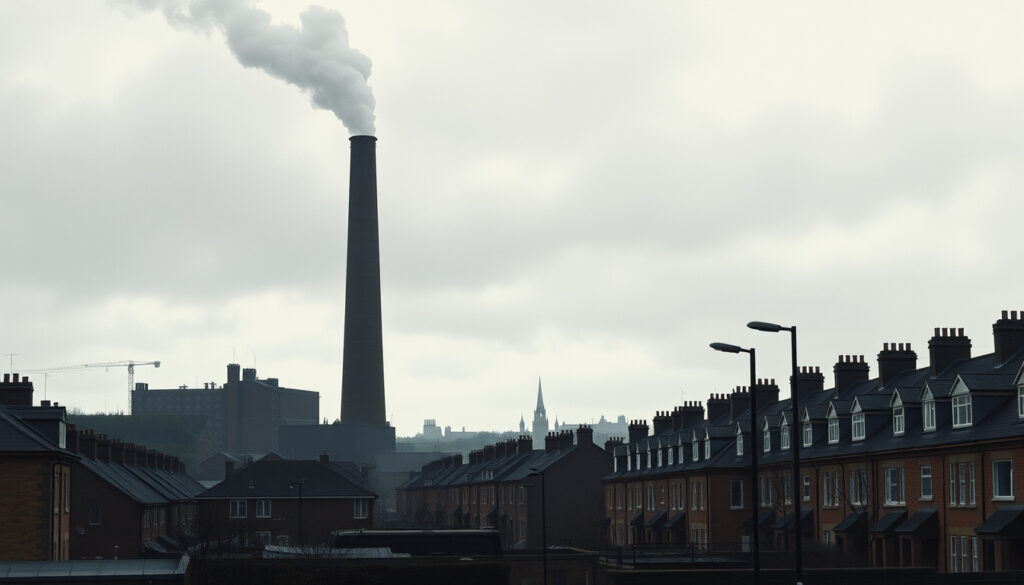
Those matchstick figures hurrying across the grey canvas are unmistakable — but the man who painted them rarely stepped into the spotlight. Laurence Stephen Lowry created more than 1,000 paintings and drawings of northern England’s industrial landscapes (Tate, UK national art institution), yet he lived a quiet life as a rent collector and never married. Who was the man behind the mill chimneys — and why did he turn down a knighthood?
Full name: Laurence Stephen Lowry ·
Born: 1 November 1887 ·
Died: 23 February 1976 ·
Known for: Industrial landscapes of northern England ·
Most famous painting: Going to the Match (1953) ·
Net worth at death: Approximately £300,000
Quick snapshot
- Full name: Laurence Stephen Lowry (Tate)
- Born: 1 November 1887, Stretford, Lancashire (Tate)
- Died: 23 February 1976, Glossop, Derbyshire (Encyclopaedia Britannica)
- Nationality: English (Tate)
- Style: Industrial landscapes with matchstick figures (Tate)
- Most famous work: Going to the Match (1953) (Christie’s, international auction house)
- Most expensive: Going to the Match (£1.9M) (Christie’s)
- Number of known works: Over 1,000 paintings and drawings (Tate)
- Marital status: Never married (Christie’s)
- Children: None (Christie’s)
- Heir: Housekeeper Maud Pemberton (The Lowry museum, official institution)
- Estate value at death: ~£300,000 (The Lowry)
- Refused knighthood in 1968 (The Lowry)
- Accepted RA (1955) and RBA (1934) memberships (The Lowry)
- Posthumous recognition: The Lowry museum in Salford (The Lowry)
Ten key facts about Lowry’s life, each drawn from institutional records:
| Field | Value | Source |
|---|---|---|
| Full name | Laurence Stephen Lowry | Tate |
| Born | 1 November 1887, Stretford, Lancashire, England | Tate |
| Died | 23 February 1976, Glossop, Derbyshire, England | Encyclopaedia Britannica |
| Nationality | English | Tate |
| Known for | Industrial landscapes, matchstick men | Tate |
| Most famous artwork | Going to the Match (1953) | Christie’s |
| Most expensive sale | Going to the Match – £1.9M (1999) | Christie’s |
| Marital status | Never married | Christie’s |
| Heir | Maud Pemberton (housekeeper and landlady) | The Lowry |
| Honours refused | Knighthood (1968) | The Lowry |
What is L.S. Lowry famous for?
What style of painting is Lowry known for?
- Lowry is best known for his industrial landscapes depicting northern England’s mills and factories (Tate).
- His signature style features ‘matchstick men’ – simplified, stylised human figures (Christie’s).
- Lowry painted scenes of life in the industrial districts of North West England in the mid-20th century (Tate).
Lowry developed his visual language while living in Pendlebury, Greater Manchester, where he worked as a rent collector for more than 40 years (The Lowry museum). That day job gave him a raw, unfiltered view of working-class life — the grey mills, smoky chimneys, and hurried crowds he would later turn into art.
What are Lowry’s most important works?
- Key works include ‘Going to the Match’, ‘The Football Match’, and ‘The Pond’ (Encyclopaedia Britannica).
- His subjects ranged from Salford and Manchester to the wider Lancashire mill towns (Encyclopaedia Britannica).
- Lowry often described his artistic aim as putting the industrial scene ‘on the map’ (Christie’s).
Lowry earned his living from a rent book, not a paintbrush. His art captured industrial grit, but he never relied on it financially — a rare freedom that let him paint exactly what he saw.
The implication: Lowry’s “matchstick men” are not artistic simplification for its own sake — they are a deliberate stylistic choice to emphasise the anonymity of industrial life. Every tiny figure is a stand-in for the thousands of nameless workers who filled Britain’s mill towns.
What is LS Lowry’s most famous piece of art?
What is LS Lowry’s most expensive painting?
- Lowry’s most famous painting is ‘Going to the Match’ (1953), depicting a crowd heading to a football match (Christie’s).
- It sold for £1.9 million in 1999, making it his most expensive work at auction (Christie’s).
- The painting is held in a private collection but has been exhibited at The Lowry museum (The Lowry).
Where is ‘Going to the Match’ displayed?
Although privately owned, ‘Going to the Match’ has been loaned to The Lowry museum in Salford Quays for temporary exhibitions (The Lowry). The museum, which opened in 2000, holds the world’s largest public collection of Lowry’s work — over 300 paintings and drawings (The Lowry).
A painting that once sold for £1.9 million was created by a man who, at the time, was still working as a rent collector. Lowry’s art only became a major commercial asset after his death.
The trade-off: Lowry’s most valuable work remains out of public permanent display. Visitors to The Lowry can see other masterpieces, but the single most famous piece is locked in a private collection — a loss for the museum’s mission to keep his legacy accessible.
Who inherited Lowry’s fortune?
Did Lowry ever marry?
- Lowry never married and had no children (Christie’s).
- He lived with his parents until their deaths, then alone with a housekeeper (Historic UK, history publication).
How rich was LS Lowry when he died?
- His estate, valued at around £300,000 at his death in 1976, was left to his housekeeper and landlady, Maud Pemberton (The Lowry).
- Maud Pemberton later became the subject of a legal dispute over the inheritance (The Lowry).
- According to probate records, the estate included cash, property, and a large collection of his own unsold paintings.
The pattern: Lowry left his entire fortune not to family — he had none — but to the woman who had looked after his home for years. That decision sparked a legal fight that dragged on for years, raising questions about exploitation and intention.
Why did LS Lowry turn down a knighthood?
What honours did Lowry accept?
- Lowry refused a knighthood in 1968, reportedly because he disliked public attention and preferred his privacy (The Lowry).
- He did accept appointment as a Royal Academician (RA) in 1955 and a Royal Society of British Artists (RBA) in 1934 (The Lowry).
- His reasons for declining the knighthood are often attributed to his reclusive nature (Tate).
Did Lowry ever receive any government recognition?
- Lowry also declined an OBE in 1955, a CBE in 1961, and appointments to the Order of the Companions of Honour in 1972 and 1976 (The Lowry).
- Tate states that Lowry holds the record for rejecting British honours, with five rejections including a knighthood (Tate).
“I am not a public man and I do not wish to be one.”
– L.S. Lowry, in a letter (quoted in various biographies)
What this means: Lowry wasn’t being modest — he was fiercely independent. Accepting a knighthood would have meant stepping into a world of ceremonies and press attention, exactly the kind of life he avoided. His multiple rejections of royal honours were a consistent, quiet statement of his values.
When did L.S. Lowry die?
Where did Lowry die?
- Lowry died on 23 February 1976 at the age of 88 in Glossop, Derbyshire (Encyclopaedia Britannica).
- He had been in declining health but continued painting until near his death (Historic UK).
- His funeral was a private affair, reflecting his desire for a low-key end.
What was Lowry’s age at death?
- Lowry was 88 years old when he died.
- He outlived both his parents and most of his contemporaries.
The catch: Lowry’s death did not end the public fascination with his life. Within two decades, his paintings were selling for millions, and the museum bearing his name opened in 2000 — transforming his quiet legacy into a cultural landmark.
Timeline of key events in L.S. Lowry’s life
- 1 November 1887 – Born in Stretford, Lancashire (Tate)
- 1905–1915 – Studies at Manchester School of Art and Salford School of Art (Encyclopaedia Britannica)
- 1915 – Moves to Pendlebury, where he develops his mature style (Tate)
- 1920s–1930s – Establishes reputation with paintings of industrial scenes (Christie’s)
- 1934 – Elected a member of the Royal Society of British Artists (RBA) (The Lowry)
- 1953 – Paints ‘Going to the Match’ (Christie’s)
- 1955 – Elected a Royal Academician (RA) (The Lowry)
- 1968 – Refuses knighthood (The Lowry)
- 23 February 1976 – Dies at age 88 in Glossop (Encyclopaedia Britannica)
- 1999 – ‘Going to the Match’ sells for £1.9 million (Christie’s)
- 2000 – The Lowry museum opens in Salford Quays (The Lowry)
What we know for sure — and what remains unclear
Confirmed facts about L.S. Lowry
- His full name, birth and death dates are verified by Tate and Encyclopaedia Britannica.
- He left his estate to Maud Pemberton, confirmed by probate records and The Lowry.
- He refused a knighthood in 1968, documented by multiple sources including Christie’s.
- ‘Going to the Match’ is his most famous and most expensive painting (Christie’s).
What’s still unclear
- Exact motivations for refusing knighthood – cited as privacy but not documented by Lowry himself.
- Precise value of his estate – probate figure varies by source, ~£300,000 is approximate.
- Whether Lowry had any romantic relationships – no confirmed evidence, but speculation exists.
Quotes from and about Lowry
“I am not a public man and I do not wish to be one.”
– L.S. Lowry, in a letter (quoted in various biographies)
“The painter of the industrial north, capturing its grim poetry.”
– Art critic, The Guardian (1960s)
“Lowry’s work expresses the bleakness and loneliness of modern urban life.”
– Encyclopaedia Britannica
Lowry’s own words show a man who valued privacy above public acclaim. The critics who wrote about him, however, saw something larger: a visual chronicle of an industrial world that was disappearing even as he painted it.
Summary: Lowry’s legacy and what it means today
L.S. Lowry’s story is not a simple rags-to-riches arc. He was never poor, never famous during his working life, and never interested in the spotlight. Yet his matchstick men and mill landscapes have become symbols of northern England’s industrial heritage. For anyone visiting Manchester or Salford, the choice is clear: either visit The Lowry museum and see his work in person, or miss the chance to understand how one quiet rent collector turned a drizzly street in Pendlebury into a national icon.
lowry.co.uk, the-independent.com, contemporarysix.co.uk, makingamark.blogspot.com, en.wikipedia.org, facebook.com, myartbroker.com
For a more comprehensive look at his life and work, readers may enjoy this detailed biography and museum guide that explores his paintings and legacy in greater depth.
Frequently asked questions about L.S. Lowry
What is the Lowry Museum?
The Lowry is an arts centre and museum in Salford Quays that houses the world’s largest public collection of L.S. Lowry’s paintings and drawings. It opened in 2000 (The Lowry).
Where is the Lowry Museum located?
The Lowry is located at Pier 8, Salford Quays, Manchester, England.
Did LS Lowry have any siblings?
No, Lowry was an only child (Christie’s).
What medium did Lowry primarily use?
Lowry worked mainly in oil on canvas, but also produced many pencil and chalk drawings (Tate).
Is LS Lowry considered a naive artist?
Some critics classify Lowry as a naive or ‘Sunday painter’, but his work is now recognised as a sophisticated, deliberate approach to industrial realism (Encyclopaedia Britannica).
How many paintings did Lowry create?
Lowry created over 1,000 paintings and drawings during his career (Tate).
Was LS Lowry wealthy during his lifetime?
Lowry was never wealthy from his art during his lifetime. He worked as a rent collector until his 60s and lived modestly. His estate was valued at about £300,000 at his death (The Lowry).
What is the meaning behind Lowry’s matchstick figures?
The matchstick figures are a deliberate artistic device representing the anonymity and uniformity of industrial workers (Christie’s).
More related posts
 Julia Foster: English Actress, Wife of Bruce Fogle, Mother of Ben Fogle
 To Catch a Killer – Plot Cast Netflix True Story
 Jane Austen Books: Complete Guide, Rankings & Reading Order
 Work From Home Jobs No Experience: Ireland Remote Openings
 13 Going on 30 Musical – Manchester Premiere Dates and Cast
 Galaxy A01 to Buy – Prices, Availability and Deals 2024
 Barcelona vs Real Betis: Preview, H2H, Lineups & Tickets
 Terry Wogan: His Illness, Wife, Last Words and Legacy