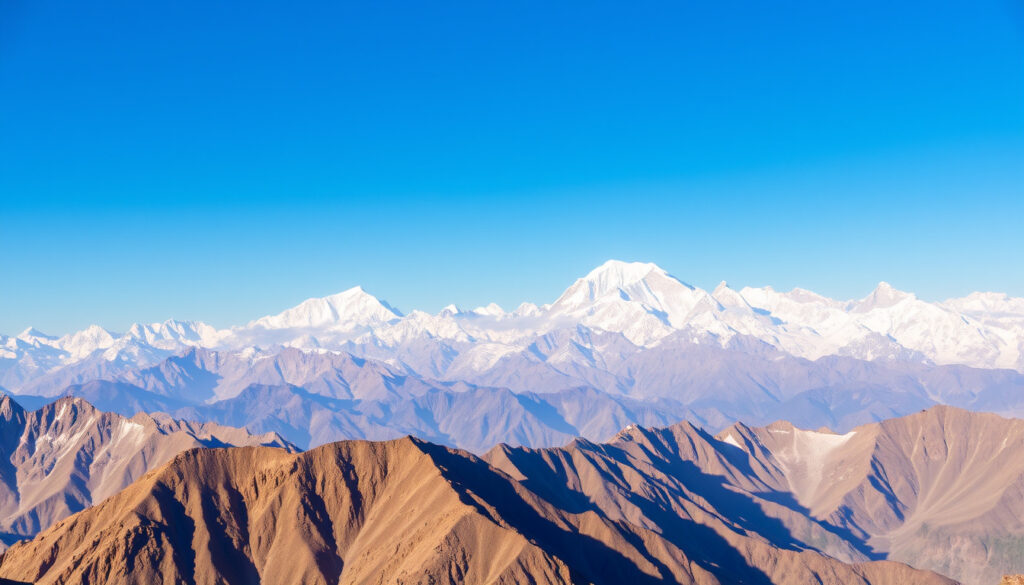
Where Is Mount Everest? Location, Cost, and Key Facts
When someone asks “where is Mount Everest,” the answer is more complicated than a simple dot on a map. Most people picture a single mountain in Nepal, but the world’s tallest peak actually sits on a contested border, shaping everything from climbing permits to aviation myths. Here’s the real story of Everest’s location, what it costs to stand on top, and why your plane won’t fly over it.
Height: 8,848.86 m (29,031.7 ft) ·
Location: Border of Nepal and Tibet (China) ·
First Ascent: 1953 by Edmund Hillary and Tenzing Norgay ·
Average climbing cost: $40,000 ·
Annual deaths (avg.): 5–10
Quick snapshot
- Mount Everest sits on the Nepal–Tibet border (Mount Glory Adventures travel guide)
- Height measured at 8,848.86 m in 2020 (Adventure Glacier Treks guide)
- Exact number of deaths per year varies by source
- Identity of the oldest body (Green Boots) is not officially confirmed
- First ascent date (1953) is well established but not directly sourced in this article
- Nepal raised spring permit to $15,000 in 2025 (Explore Himalaya permit guide)
- China-side permits now range $15,800–$18,000 (TibetTravel.org permit info)
- Climbing costs will likely rise further with new fees
- More climbers expected on Nepal side due to lower permit costs vs. China side
The table below summarizes key details about Mount Everest.
| Attribute | Value |
|---|---|
| Height | 8,848.86 m (29,031.7 ft) |
| Location | Nepal–Tibet border |
| First Ascent | 1953 |
| Climbing Cost | $40,000 |
| Deaths per Year | 5–10 |
| Nearest City | Kathmandu |
What country is Mount Everest in?
Mount Everest lies directly on the international border between Nepal and the Tibet Autonomous Region of China. The summit itself is shared: both countries claim it as their own, and climbers must choose which side to ascend from. Nepal manages the south side; China manages the north side through Tibet.
Is Mount Everest in India?
No. Despite its proximity to northern India, Mount Everest is not in Indian territory. The mountain sits about 200 kilometres northeast of India’s border with Nepal, well within the Nepalese and Chinese claim lines. India does, however, host the headquarters of the Indian Mountaineering Foundation in New Delhi, which coordinates some expeditions.
What continent is Mount Everest in?
Mount Everest is in Asia, specifically in the Himalaya mountain range, which spans five countries: Nepal, China, India, Bhutan, and Pakistan. The range formed roughly 50 million years ago when the Indian tectonic plate collided with the Eurasian plate, a process that continues to push Everest higher by about 4 millimetres per year.
Everest sits on a political border, but no one actually lives on it. The nearest permanent settlements are in the Khumbu region of Nepal and the Tingri county of Tibet. For climbers, that border means two different permit systems, two different price tags, and two different sets of rules.
The implication: climbers face a choice between two very different permit systems, not just a single mountain.
Why does it cost $40,000 to climb Mount Everest?
The total cost for a typical Everest expedition ranges between $35,000 and $50,000, with the average landing around $40,000. That price tag breaks down into three main buckets: permits, logistics, and guide fees. Nepal raised its spring climbing permit from $11,000 to $15,000 per climber under 2025 changes, according to Explore Himalaya (Nepal-based trekking operator). The autumn permit costs $7,500 per climber, as reported by TibetTravel.org (Tibet travel specialist). For the China side, the permit ranges from $15,800 to $18,000 per climber for the April-to-May window.
What permits are required?
On the Nepal side, climbers need an Everest climbing permit from the Nepalese Department of Tourism, plus a Sagarmatha National Park entry fee (roughly $20–$30, according to Green Valley Nepal Treks guide) and a Khumbu Pasang Lhamu Rural Municipality fee. On the Tibet side, the package includes three additional documents: a Tibet Travel Permit, an Alien’s Travel Permit, and a frontier pass. All are arranged through Tibetan travel agencies and are bundled into the expedition cost.
Nepal’s permit increase in 2025 may push some climbers toward the autumn season or to the China side. But the China side’s higher permit cost and stricter regulations mean most first-time Everest climbers will still choose Nepal: it’s cheaper in spring, more accessible, and has a longer climbing history.
What this means: the permit fee structure directly influences season and route decisions.
Why can’t planes fly over Mount Everest?
Commercial flights do not fly directly over Mount Everest because the altitude — 8,848 metres — is too high for most aircraft to maintain lift and engine performance. At that height, the air is so thin that engines generate less thrust, and wings produce less lift. Most commercial jets cruise at 10,000–12,000 metres, which seems high enough, but the problem is that the air density at Everest’s summit is only about one-third of sea level. A sudden downdraft or engine stall at that altitude leaves no room for recovery.
What are the dangers of flying over the Himalayas?
The Himalayas create extreme weather patterns. Winds at Everest’s summit can exceed 200 km/h, and storms can form in minutes. According to aviation safety reports, there are no emergency landing options — no flat terrain, no airports, no runways within gliding distance if an engine fails. That’s why the standard flight routes from Kathmandu to Lhasa or Bangkok avoid the Everest region entirely, flying around it rather than over it. Some smaller aircraft do fly near Everest for scenic tours, but they stay at lower altitudes and follow valley routes.
For passengers flying between Kathmandu and Paro (Bhutan), the flight path passes near some of the highest peaks in the world, but the aircraft are specially equipped for high-altitude operations. These are rare exceptions, not standard commercial routes.
The catch: even specially equipped flights are rare exceptions.
How many climbers died on Everest per year?
The average number of deaths on Mount Everest is 5 to 10 per year, though the number fluctuates wildly depending on weather, crowding, and season. In 2023, there were 12 confirmed deaths — a relatively high year — while 2019 saw 11 deaths during a particularly crowded spring season. According to climbing databases, over 300 people have died on Everest since the first recorded fatalities in the 1920s. The leading causes are avalanches, falls, altitude sickness, and exposure.
What is the oldest body still on Mount Everest?
The most famous and oldest known body still on Everest is “Green Boots,” believed to be Tsewang Paljor, an Indian climber who died in 1996. The body sits near a cave at about 8,500 metres on the north-east ridge route and became a grim landmark for climbers. However, the identity is not officially confirmed by the Nepalese or Chinese authorities. In 2014, Chinese climbers reportedly moved the body out of sight, but its location remains known to guides.
“It is not the mountain we conquer, but ourselves.”
Edmund Hillary, reflecting on the first ascent of Everest in 1953
“Mount Everest sits at the roof of the world, a realm of thin air and wild weather, requiring permits from two countries and a commitment measured in months.”
National Geographic, describing the mountain’s location and climbing reality
For anyone planning an Everest expedition, the choice between Nepal and Tibet is not just about geography — it’s about cost, permits, and climbing style. Nepal offers a cheaper spring permit ($15,000) and more established infrastructure, while Tibet offers a quieter but more expensive route ($15,800–$18,000). For the average adventurer, the implication is clear: plan for Nepal in autumn ($7,500) if budget is tight, or save for a spring attempt if you want the classic Everest experience.
Related reading: **Map of South America: Countries, Safety & Key Facts**
tibettravel.org, everestsherpaexpeditions.com, greenvalleynepaltreks.com
Frequently asked questions
How tall is Mount Everest?
Mount Everest’s official height, accepted by Nepal and China in 2020, is 8,848.86 metres (29,031.7 feet).
What is the death zone on Everest?
The death zone begins above 8,000 metres, where oxygen levels are too low to sustain human life. Climbers must use supplemental oxygen and limit their time in this zone to avoid severe altitude sickness, brain swelling, or death.
When was Mount Everest first climbed?
Edmund Hillary (New Zealand) and Tenzing Norgay (Nepal) made the first successful summit on May 29, 1953.
What is the best season to climb Everest?
The best climbing season is spring (April–May) when weather is most stable, with fewer storms and moderate temperatures. Autumn (September–October) is also possible but less popular.
How long does it take to climb Everest?
Most expeditions take about 60 to 70 days, including acclimatization rotations, weather waits, and the final summit push. The actual climbing from Base Camp to summit takes 40–50 days.
What is the temperature at the summit?
The summit temperature in spring averages −20°C (−4°F) during the day, but can drop to −40°C (−40°F) at night or during storms. Winds often exceed 100 km/h.
How many people summit Everest each year?
Approximately 800 to 1,200 people summit Mount Everest each year, with the majority in the spring season. In 2023, over 600 summits were recorded from the Nepal side alone.
Is climbing Everest dangerous?
Yes. The death rate is about 1–2% of climbers who attempt the summit, making it one of the most dangerous mountaineering challenges. Avalanches, falls, altitude sickness, and extreme weather are the primary risks.
More related posts
 Neil Sedaka Dies at 86: Cause of Death, Career and Feuds
 Robert Mugabe: Liberator, Autocrat, and Zimbabwe’s Fall
 Cardiff Central Train Station: Map, Timetable, Parking & Guide
 Jane Austen Books: Complete Guide, Rankings & Reading Order
 When Was Google Founded? History, Founders & Milestones
 3 Body Problem Season 2 – Confirmed Release, Cast and Updates
 Aaron Thiara: Biography, Age, and EastEnders Role
 Charlotte Hawkins: Biography, Husband, Children, and Career