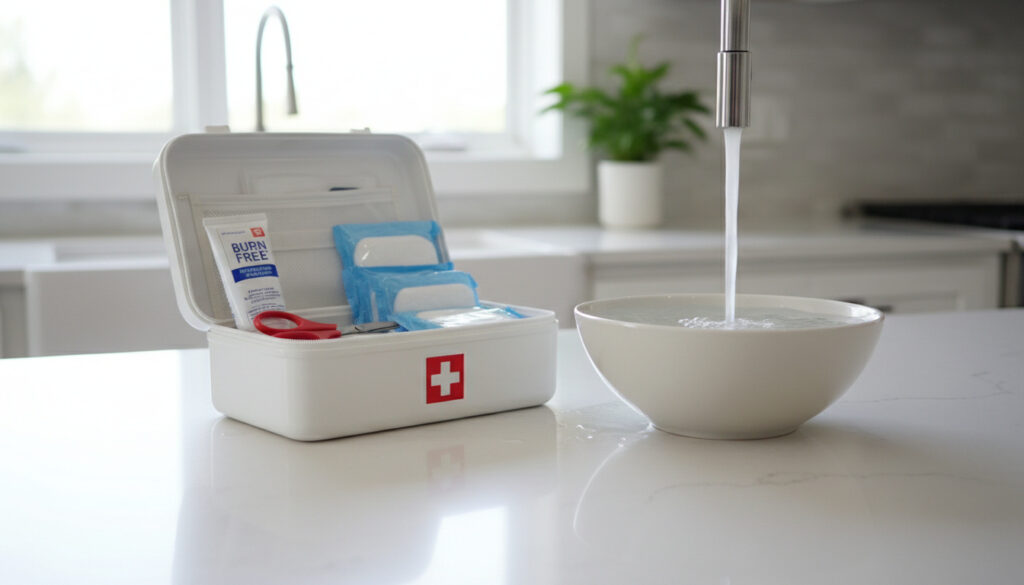
How to Treat a Burn – Step-by-Step First Aid Guide
Burns remain one of the most common household injuries, with proper immediate response often determining recovery speed and complication risk. When skin contacts heat, chemicals, or electricity, the resulting tissue damage requires specific interventions to halt injury progression and prevent infection.
Every year, emergency departments treat thousands of burn cases that escalate due to delayed or incorrect first aid. Medical consensus from major health institutions emphasizes particular cooling methods and warning signs that laypeople frequently misunderstand, leading to unnecessary tissue damage or preventable hospitalizations.
This guide synthesizes current evidence-based protocols to distinguish between minor injuries manageable at home and emergencies requiring surgical intervention.
What Should You Do Immediately After Getting a Burn?
The first moments after a burn determine long-term outcomes. Thermal injuries continue damaging tissue until the heat source dissipates, making rapid cooling essential.
| Burn Degree | Symptoms | Initial Action | Typical Healing Time |
|---|---|---|---|
| First-degree | Red, dry, painful (like sunburn) | Cool running water 10-20 minutes | 3-6 days |
| Second-degree | Moist, red, blistered, swollen | Cool water, remove jewelry, cover loosely | 1-3 weeks |
| Third-degree | Charred, white, black, or leathery; often numb | Seek emergency care immediately | Months to years; requires grafts |
- Cool running water remains the universally recommended first response to halt thermal damage
- Ice application risks additional tissue damage and hypothermia, particularly in children
- Removing rings, watches, and tight clothing prevents constriction before swelling begins
- Home remedies like butter, oils, and ointments trap heat and increase infection risk during initial cooling
- Burn depth and body surface area determine whether home care suffices or requires emergency intervention
- Chemical and electrical burns demand professional evaluation regardless of apparent size
- Children and elderly patients require modified cooling protocols to prevent hypothermia
| Cooling duration | 10-20 minutes under cool running water only |
| Water temperature | Cool, not cold; ice causes further damage |
| Jewelry removal | Essential before swelling begins |
| Blister integrity | Maintaining intact blisters prevents bacterial infection |
| Ointment timing | Only after complete cooling and drying |
| Pain management | Ibuprofen or acetaminophen recommended |
According to Temple Health, cool water lowers skin temperature and reduces pain, but the process should stop if the patient begins shivering.
How Do You Treat Burns Based on Severity?
Burn classification by depth determines treatment protocols. Chemical Hazards Emergency Medical Management defines three distinct degrees, each requiring specific interventions.
First-Degree Burns (Superficial)
These injuries affect only the epidermis, presenting as redness without blistering. Treatment involves cooling with running water, then applying aloe vera lotion or moisturizer. The American Burn Association recommends avoiding further sun exposure during healing.
Second-Degree Burns (Partial-Thickness)
Extending into the dermis, these burns cause blisters, swelling, and significant pain. After cooling, apply antibiotic ointment or petroleum jelly daily for five to seven days, then continue with petroleum jelly to maintain moisture. Texas Children’s Hospital emphasizes keeping the wound moist rather than allowing it to dry and crack.
Third-Degree Burns (Full-Thickness)
Involving all skin layers plus nerve endings, these injuries often appear charred, white, or leathery. Sensation may be absent due to nerve destruction. Cleveland Clinic notes these burns cannot self-heal and require debridement, skin grafts, and months of rehabilitation.
Never apply ice, frozen gel packs, or extremely cold water to burns. Ice causes vasoconstriction that exacerbates tissue damage and can lead to hypothermia in pediatric or geriatric patients.
When Should You Seek Professional Medical Help for a Burn?
Certain injury characteristics mandate immediate emergency department evaluation regardless of patient age or pain level.
Critical Size and Location Thresholds
Adults require emergency care for burns exceeding palm size, while children need assessment for injuries larger than their arm. Mayo Clinic specifies that burns on the face, hands, feet, genitals, buttocks, or over major joints always warrant professional evaluation due to functional risks and infection potential.
Infection Warning Signs
Monitor healing wounds for increasing pain, fever, redness spreading beyond the original border, pus formation, foul odor, or swelling that fails to improve. These symptoms indicate bacterial colonization requiring antibiotic therapy.
Special Populations and Burn Types
Children with burns covering more than ten percent of body surface area need hospitalization. NHS guidelines note that elderly patients face higher hypothermia risks during cooling. Chemical burns require copious water flushing for twenty minutes minimum followed by emergency care, while electrical burns can cause internal damage despite minimal surface injury.
What Are Common Mistakes to Avoid When Treating Burns?
Folk remedies and outdated practices persist in popular culture, often worsening outcomes despite good intentions.
Debunking Home Remedies
NHS recommendations explicitly warn against applying butter, oils, egg whites, or toothpaste to fresh burns. These substances trap heat against tissue, create bacterial breeding environments, and complicate subsequent medical cleaning.
Blister Management Errors
Intact blisters serve as biological dressings protecting raw dermis from infection. Popping or draining blisters introduces pathogens and increases scarring risk. If blisters rupture spontaneously, clean gently with mild soap and water, then apply petroleum jelly and fresh sterile gauze.
After complete cooling, pure aloe vera lotion soothes first-degree burns, while petroleum jelly or antibiotic ointment maintains moisture for second-degree wounds. These options support healing without the risks associated with home remedies.
Never apply ice, butter, or adhesive bandages directly to burn wounds. Do not use cotton balls or fluffy materials that shed fibers into the wound bed. Avoid tight wrapping that restricts blood flow.
How Long Does It Take for a Burn to Heal?
Recovery timelines correlate directly with injury depth and surface area, though individual factors like age, nutrition, and infection status modify these estimates.
- Immediate phase (0-20 minutes): Cool running water application halts thermal injury progression and reduces pain severity.
- Inflammatory phase (Days 1-3): Blister formation occurs in second-degree burns; first-degree burns show peak redness.
- Re-epithelialization (Days 4-14): Superficial second-degree burns heal through skin adnexa regeneration; first-degree burns resolve completely.
- Remodeling phase (Weeks 2-3+): Deep second-degree injuries continue healing with potential for hypertrophic scarring and contracture.
- Surgical recovery (Months to years): Third-degree burns require grafting, physical therapy, and scar management extending indefinitely.
What Is Definitively Known Versus Still Uncertain in Burn Care?
| Established Practice | Areas of Uncertainty |
| Cool running water (not ice) reduces tissue damage | Optimal cooling duration varies between 5-20 minutes across institutions |
| Third-degree burns require surgical grafting | Superiority of petroleum jelly versus antibiotic ointments remains debated |
| Loose sterile covering prevents infection | Exact body surface area thresholds for elderly hospitalization lack universal consensus |
| Chemical burns need 20+ minutes flushing | Long-term efficacy of aloe vera versus placebo in scar prevention |
What Context Determines Burn Severity and Risk?
Scalds from hot liquids cause the majority of household burns, particularly among children and elderly individuals with reduced reaction times. Contact burns from hot surfaces, flame injuries, and sun exposure represent other common etiologies.
Prevention strategies include maintaining water heater temperatures below 120°F, using back burners when cooking with children present, and applying La Roche-Posay Sunscreen for Sensitive Skin to prevent radiation burns. Occupational chemical handlers require specific neutralizing protocols and immediate shower access.
Which Medical Authorities Shape Current Burn Treatment Protocols?
Contemporary first aid standards derive from systematic reviews by major medical institutions and specialized burn centers.
“Run cool (not cold) water over the burn area for about 10 to 20 minutes. Do not use ice, ice water, or butter.”
— Mayo Clinic
“Stop the burning process by running cool water over the burn. Remove all jewelry, watches, rings, and clothing around the burned area.”
— American Burn Association
“Cool the burn with cool or lukewarm running water for 20 minutes as soon as possible after the injury.”
— National Health Service
What Are the Essential Actions for Burn Treatment?
Effective burn management requires immediate cooling with running water, accurate severity assessment, loose sterile covering, and vigilant monitoring for infection signs. High-risk demographics including infants, elderly patients, and those with compromised physical resilience need lower thresholds for emergency evaluation. Chemical, electrical, and large surface area burns always require professional intervention regardless of initial appearance.
Frequently Asked Questions
Should I cover a burn or leave it open?
Cover loosely with sterile gauze or a clean cloth to protect against infection, but avoid tight wrapping that restricts circulation.
How do you treat a chemical burn?
Flush the affected area with copious cool running water for at least twenty minutes, remove contaminated clothing, and seek emergency care immediately regardless of burn size.
What special considerations apply to burn treatment for children?
Use the palm rule to estimate body surface area, avoid prolonged cooling to prevent hypothermia, and seek hospital care for burns exceeding ten percent of body surface.
What is the best home remedy for minor burns?
After cooling, apply pure aloe vera lotion to first-degree burns for symptom relief and moisture retention.
Should you pop a burn blister?
Never pop burn blisters, as intact blisters provide natural infection barriers; rupture significantly increases infection and scarring risks.
What ointment should you put on a burn?
Apply petroleum jelly or antibiotic ointment like bacitracin only after complete cooling, continuing with petroleum jelly to maintain moisture during healing.
Is ice good for treating burns?
No, ice causes vasoconstriction and additional tissue damage; use cool running water exclusively for initial treatment.
More related posts
 Justin Moorhouse: Son’s Death and Coffee Van Legacy
 Reacher Season 3 Cast – Full List of Actors and Roles
 Fast Results Horse Racing Today: Live UK & Irish Updates
 William Rush Death: Waterloo Road Actor Dies at 31
 International Paper Share Price: Live IP Stock Quote & Forecast
 Sandra Oh: Ethnicity, Grey’s Anatomy, and Relationships
 What Date Is 4 Weeks From Today? Calculator & Guide
 Cast of Slow Horses – Actors and Seasons Guide