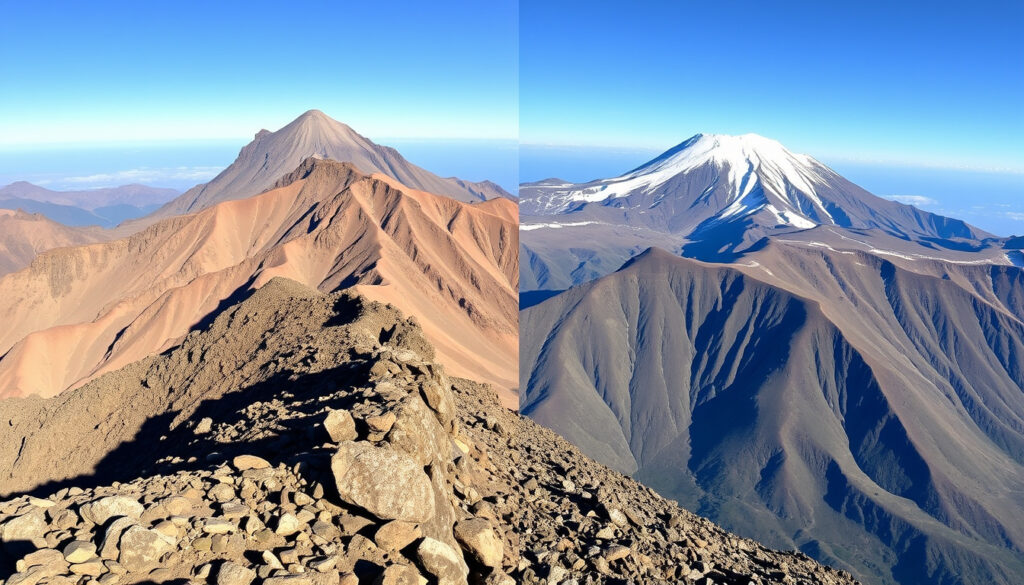
Mount Toubkal vs Kilimanjaro: Difficulty & Beginner Guide
There’s something about a mountain summit that grabs you before you even lace up your boots. For anyone considering their first high-altitude trek, the decision often narrows to two names: Mount Toubkal in Morocco and Tanzania’s Mount Kilimanjaro. This comparison walks through what each climb actually demands, which one is safer for beginners, and how altitude really changes the game.
Height: 4,167 m (13,671 ft) ·
Location: High Atlas, Morocco ·
Rank: Highest peak in North Africa and the Arab world ·
Typical Trek Duration: 2 days ·
Difficulty: Moderate to Strenuous
Quick snapshot
- Toubkal is 4,167 m, highest in North Africa (Earth’s Edge (trekking operator))
- No technical climbing required in normal conditions (Earth’s Edge)
- Typical 2-day itinerary with summit day of 8–9 hours (Earth’s Edge)
- Kilimanjaro summit is 5,895 m, 1,728 m higher (Climbing Kilimanjaro (specialist guide))
- Exact annual fatalities on Toubkal – no central registry (Earth’s Edge)
- Whether a complete beginner with no hiking experience can summit safely (Miss Wanderitall (travel blog))
- Precise difficulty comparison to mountains beyond Kilimanjaro (Earth’s Edge)
- 1923: First recorded ascent by Marquis de Segonzac (Wikipedia (encyclopedia))
- 1942: First winter ascent (Wikipedia)
- 1990s: Surge in trekking popularity (Call to Adventure (outdoor blog))
- Present: One of North Africa’s most popular treks (Earth’s Edge)
- Winter climbing gaining traction with mandatory guides (Call to Adventure)
- Comparison content scarcity creating opportunity for structured guides (NewsLedger (travel reference))
- Growing interest in high-altitude beginner mountains (Climbing Kilimanjaro)
The five key specs below ground the comparison in hard numbers, not guesswork.
| Attribute | Value | Source |
|---|---|---|
| Elevation | 4,167 m (13,671 ft) | Earth’s Edge (trekking operator) |
| Location | High Atlas Mountains, Morocco | Wikipedia (encyclopedia) |
| First Ascent | 1923 by Marquis de Segonzac | Wikipedia |
| Difficulty Grade | PD (Peu Difficile) / Moderate | Earth’s Edge |
| Best Season | April to October (summer); winter climb possible with crampons | Call to Adventure (outdoor blog) |
Is Mount Toubkal Harder Than Kilimanjaro?
Height and duration comparison
The first thing that separates these two is raw altitude. Kilimanjaro towers at 5,895 m – more than a vertical mile above Toubkal’s 4,167 m (Climbing Kilimanjaro (specialist guide)). That difference translates directly into trek time. A standard Toubkal itinerary takes two days with a summit push of 8–9 hours (Earth’s Edge (trekking operator)), while Kilimanjaro requires five to nine days depending on the route, plus a gruelling summit night that starts around midnight (Alpine Ascents (expedition company)).
Death rates on Kilimanjaro vs Toubkal
Reliable mortality data for Toubkal is scarce – no central body tracks annual fatalities. Kilimanjaro’s record is more documented. Estimates suggest 10 to 30 deaths per year among roughly 35,000 climbers, a rate of about 0.03–0.09% (Climbing Kilimanjaro). Toubkal’s lower altitude and shorter exposure to extreme weather likely keep its death count much lower, though hard numbers are unavailable.
Technical difficulty differences
Toubkal is a non-technical walk-up. “Outside winter, Toubkal usually does not require crampons or an ice axe,” according to Earth’s Edge (trekking operator). In contrast, Kilimanjaro’s routes vary from the non-technical Marangu route to the more challenging Western Breach, which involves some scrambling. The consensus: Toubkal’s terrain is straightforward; the real challenge is stamina and altitude.
How Hard Is It to Climb Mount Toubkal?
Fitness requirements
You do not need to be a marathon runner, but Toubkal demands good aerobic fitness and the ability to hike for 5–7 hours on consecutive days. The mountain is often described as “beginner-friendly among high-altitude treks, but still requires preparation and a reasonable base level of fitness”.
Typical itinerary
A standard two-day schedule: Day 1 – drive from Marrakech to Imlil (1,740 m), hike 5–6 hours to the Toubkal Refuge (3,207 m). Day 2 – summit push starting before dawn, 8–9 hours round trip, then descend to Imlil. The total distance is roughly 30 km (Miss Wanderitall (travel blog)).
Weather and trail conditions
In summer (April–October), temperatures at the refuge hover around 10°C at night, with daytime highs rarely exceeding 25°C below 3,000 m. Above 3,000 m, wind and cold are constant. Winter transforms the climb: crampons and an ice axe become mandatory, and a licensed guide is required by Moroccan law (Call to Adventure (outdoor blog)).
The moderate altitude of Toubkal means trekkers face a real but manageable risk of Acute Mountain Sickness (AMS). The key variable is your overnight at 3,207 m before the summit – that 12‑hour acclimatisation window is what makes the climb safe for most fit beginners.
The implication is clear: Toubkal’s itinerary balances physical demand with strategic rest, making it accessible to prepared newcomers.
Do You Need Oxygen to Climb Toubkal?
Altitude profile and AMS risk
No supplemental oxygen is required on Toubkal. The summit at 4,167 m sits well below the 6,000 m threshold where oxygen use becomes common. Altitude sickness, however, is a real possibility. Common symptoms include headache, nausea, and fatigue, but they are usually mild if you pace yourself and hydrate.
Oxygen use on high mountains
Commercial climbing above 6,000 m – think Everest, Aconcagua, Denali – routinely uses bottled oxygen. Toubkal’s elevation is too low for that. The real danger for first-time trekkers is not hypoxia but poor acclimatisation. Spending a night at the refuge before summit day dramatically lowers risk.
Symptoms of altitude sickness on Toubkal
Watch for the classic signs: persistent headache, loss of appetite, dizziness, and shortness of breath that worsens with exertion. If symptoms appear, the only reliable treatment is to descend. Toubkal’s short itinerary means you are never more than a few hours from lower altitude, which is a built‑in safety advantage.
Many trekkers assume “no oxygen needed” means “no altitude risk”. The truth: even at 4,167 m, AMS can hit unexpectedly. The difference is that Toubkal’s quick descent route gives you a safety margin that Kilimanjaro, with its longer summit night, does not offer.
The pattern underscores a key principle: altitude awareness matters more than oxygen equipment on a mountain of this height.
What I Wish I Knew Before Climbing Mount Toubkal
Packing essentials
Warm layers are non‑negotiable: temperatures on summit day can drop below freezing even in summer. Sun protection is just as critical – the high‑altitude sun in the Atlas Mountains is intense. Good hiking boots with ankle support, a waterproof shell, and a headlamp for the pre‑dawn start are also must‑haves.
Acclimatisation tips
The single most effective step is to spend at least one night at the Toubkal Refuge (3,207 m) before summit day. That extra 12–15 hours at altitude reduces AMS risk significantly. Drink plenty of water, avoid alcohol, and climb slowly on summit morning.
Guide vs solo decisions
Hiring a guide is common and highly recommended for first‑timers. “A licensed guide is mandatory in winter,” notes Call to Adventure (outdoor blog). In summer, you can go independent, but a guide adds safety, navigational help, and local logistics (mules to carry gear). Several operators offer two‑day packages from Marrakech.
Bathroom realities on the trail
The refuge has basic toilet facilities, but on the trail and summit day you’ll rely on outdoor spots. Responsible waste management – packing out your rubbish, using designated areas – is crucial to keep the mountain clean. Treat this as part of the adventure, not a surprise.
What this means: preparation is the difference between a tough ordeal and a rewarding summit.
Can a Beginner Climb Mount Toubkal?
Minimum fitness level
Yes – a beginner in good health with a basic fitness base can summit Toubkal. The key is being able to hike 5–7 hours with a daypack, carrying about 5–7 kg. “General fitness and determination, but no special technical skill” is how Miss Wanderitall (travel blog) puts it.
Prior experience needed
No prior climbing or mountaineering experience is necessary. The mountain has no rock sections that require ropes. However, prior hiking experience on uneven terrain helps with confidence and trail rhythm.
Training suggestions
Stair climbing, long walks with a loaded pack, and regular cardio sessions for 6–8 weeks before the trek will prepare most people. Focus on building lower‑body endurance and lung capacity. A reasonable goal: be able to hike 10 km with 500 m of elevation gain in under three hours.
Toubkal is one of the few high‑altitude treks where a novice can succeed without technical gear. But “beginner‑friendly” does not mean “effort‑free”. The mountain demands respect for the altitude and a solid morning of walking. Treat it as a serious physical challenge, not a casual day hike.
The takeaway: Toubkal is a feasible first high-altitude summit for those who invest in preparation.
Timeline
Four key milestones mark Toubkal’s history from first ascent to modern popularity.
- 1923 – First recorded ascent by Marquis de Segonzac (Wikipedia (encyclopedia))
- 1942 – First winter ascent by a French party (Wikipedia)
- 1990s – Increased popularity as a trekking destination (Call to Adventure (outdoor blog))
- Present – One of the most popular high‑altitude treks in North Africa (Earth’s Edge (trekking operator))
The implication: Toubkal’s history is short, but its rapid rise in trekking traffic mirrors the global interest in non‑technical high‑altitude experiences. The lack of a central fatality database, however, means safety improvements are harder to track.
What’s Clear and What’s Not
Confirmed facts
- Mount Toubkal is 4,167 m tall (Earth’s Edge)
- It is the highest peak in North Africa (Wikipedia)
- No technical climbing required in normal conditions (Earth’s Edge)
- Altitude sickness can occur but is usually mild (Earth’s Edge)
- Winter climbs require a licensed guide, crampons, and ice axe (Call to Adventure)
What’s unclear
- Exact number of annual fatalities on Toubkal
- Whether a complete beginner without any hiking experience can safely summit
- Precise comparison of difficulty to mountains beyond Kilimanjaro (e.g., Mont Blanc)
The pattern: the known facts are solid, but gaps in data leave room for caution.
Voices from the Trail
“Toubkal is a challenging but non‑technical climb, perfect for those wanting to experience high altitude without ice axes.”
— Guide from Much Better Adventures (trekking operator)
“The landscape is more like the American Southwest than the Alps – stark, beautiful, and surprisingly remote.”
— Solo female hiker from Solo Female Wanderer (travel blog)
What these voices share: Toubkal is accessible, but it commands respect. The non‑technical description is real, but the remoteness and altitude demand preparation. The pattern is consistent: the mountain rewards those who plan, not those who wing it.
For anyone planning their first high‑altitude trek, the choice is clearer after comparing the numbers. Toubkal delivers a genuine summit at 4,167 m without the altitude‑related complications or week‑long commitment of Kilimanjaro. The trade‑off is simpler logistics, lower cost, and a safety profile that makes it the sensible entry point. For the fit beginner with good preparation, the roof of North Africa is not just reachable – it’s the best warm‑up you can find before taking on the bigger mountains of the world.
calltoadventure.uk, reddit.com, iantaylortrekking.com, facebook.com, adventurealternative.com, reddit.com, reddit.com
For a detailed breakdown of what to expect on the trail, check out this Mount Toubkal difficulty and beginner guide that covers altitude, training, and essential gear.
Frequently asked questions
What is the best time of year to climb Mount Toubkal?
The ideal season is April through October, when temperatures are milder and snow is absent from the main trail. Winter climbs (November–March) are possible but require crampons and a certified guide.
How much does a guided tour to Toubkal cost?
Two‑day guided tours from Marrakech typically range between €120 and €200 per person, including transport, meals, guide, and overnight at the refuge. Prices vary by operator and group size.
Do I need a visa to climb Toubkal in Morocco?
Most nationalities do not need a visa for stays under 90 days – check with the Moroccan embassy for your country. Your passport should be valid for at least six months from the date of entry.
What gear is essential for the Toubkal trek?
Key items: sturdy hiking boots, warm layers (fleece and a down jacket), waterproof jacket, sun hat, sunglasses, headlamp, water bottles (at least 2 L), and a first‑aid kit including altitude‑sickness medication.
Is Toubkal harder than Mont Blanc?
No – Mont Blanc (4,808 m) involves glacier travel, crevasse risk, and requires technical mountaineering skills. Toubkal is a non‑technical walk‑up, making it significantly easier and safer for a beginner.
How long does the Toubkal summit day take?
Summit day typically starts around 5 a.m. and lasts 8–9 hours round trip, including rest breaks and the descent back to the refuge.
Can I climb Toubkal in winter?
Yes, but winter climbing is a step up in difficulty. Crampons and an ice axe are required, and Moroccan law mandates a licensed mountain guide. Snow conditions can significantly lengthen the summit day.
More related posts
 Jon Pointing: Real Name, Career, and Big Boys Fame
 Nearest Takeaway to Me – Open Now Delivery Nearby
 James Brolin: Biography, Age, Marriage to Barbra Streisand
 When Was Google Founded? History, Founders & Milestones
 La Roche-Posay Sunscreen – Best Picks for Sensitive Skin
 Charlotte Hawkins: Biography, Husband, Children, and Career
 Teddy Swim Lo e Control: Illne , Face Tattoo & Hit
 What Is an Occupational Therapist – UK NHS Role, Salary, Qualifications