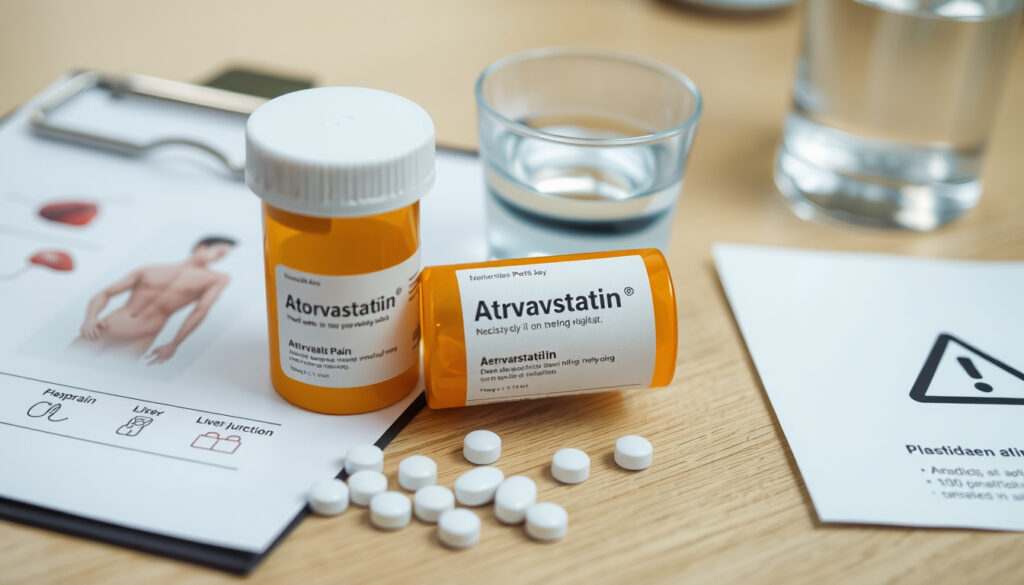
Side Effects of Atorvastatin: Common, Serious, and Management
If you’re one of the millions taking atorvastatin to lower cholesterol, you’ve probably wondered about the side effects. Muscle aches are the most common complaint, affecting about 10% of people according to Harvard Health, but the full picture includes everything from mild digestive issues to rare but serious muscle damage.
Most common side effect: Muscle aches (affects about 10% of patients) (Harvard Health) ·
Serious side effect incidence: Rhabdomyolysis is very rare but risk increases with high doses (GoodRx) ·
Liver enzyme elevation: Atorvastatin can cause elevated liver enzymes (StatPearls (medical reference))
Quick snapshot
- Muscle pain (Harvard Health)
- Headache (Mayo Clinic)
- Nausea (Cleveland Clinic)
- Diarrhea (Cleveland Clinic)
- Joint pain (GoodRx)
- Rhabdomyolysis (Mayo Clinic)
- Liver damage (StatPearls (medical reference))
- Allergic reactions (Mayo Clinic)
- Increased blood sugar (GoodRx)
- Excessive alcohol (Mayo Clinic)
- Certain antifungal and antibiotic drugs (GoodRx)
- Grapefruit juice (increases drug levels) – per official labeling (GoodRx)
- Older adults (SingleCare)
- People with multiple health conditions (Harvard Health)
- Those on interacting drugs (GoodRx)
Five key facts about atorvastatin, from drug class to monitoring requirements, set the stage for understanding its side-effect profile.
| Label | Value |
|---|---|
| Drug name | Atorvastatin (Lipitor) |
| Class | HMG-CoA reductase inhibitor (statin) |
| Common side effect rate | ~5–10% of users |
| Serious side effect rate | <1% (rhabdomyolysis) |
| Monitoring | Liver function tests at baseline and as needed |
What is the most common side effect of atorvastatin?
How common is muscle pain?
- Muscle aches and weakness are the most frequently reported side effect. About 10% of people develop these symptoms (Harvard Health).
- The pain often appears in the thighs, shoulders, or back and can range from mild soreness to discomfort that interferes with exercise (StatPearls (medical reference)).
- In most cases, symptoms are temporary and resolve after stopping the drug (Mayo Clinic).
What other common side effects exist?
- Digestive issues: nausea, indigestion, diarrhea, and upset stomach affect a noticeable minority of users (Cleveland Clinic).
- Neurological symptoms: headache, insomnia, and throat discomfort are also listed in clinical trials (Mayo Clinic).
- Upper respiratory infections and urinary tract infections appear more frequently in people taking atorvastatin than in placebo groups (GoodRx).
Why this matters: Most of these side effects are mild and tend to fade after the first few weeks. The real challenge is distinguishing them from unrelated health issues.
How to manage common side effects?
- Take the medication at the same time each day to build a routine (NHS (official UK guidance)).
- If muscle aches are bothersome, speak with your doctor about lowering the dose or trying a different statin (Mayo Clinic).
- Drink plenty of water and eat a balanced diet to reduce digestive discomfort (Cleveland Clinic).
The trade-off: Mild side effects often diminish within a month. A small number of patients need to stop treatment, but the vast majority adapt without changing therapy.
What organ is atorvastatin hard on?
Does atorvastatin damage the liver?
- Atorvastatin can raise liver enzymes (ALT/AST) above normal levels in 0.5–2% of patients (StatPearls (medical reference)).
- Serious liver injury, such as jaundice or hepatitis, is extremely rare — fewer than 1 in 100,000 users (NIH LiverTox).
- The drug is contraindicated in patients with active liver disease or unexplained persistent transaminase elevations (Mayo Clinic).
Liver enzyme elevation is a common lab finding, but it rarely translates into clinical liver disease. Routine monitoring keeps the risk in check.
What about kidney effects?
- Rhabdomyolysis, the breakdown of muscle tissue, can release toxins that cause acute kidney injury (Mayo Clinic).
- In a few reported cases, atorvastatin has been linked to kidney impairment, but the direct renal toxicity of statins is rare (StatPearls (medical reference)).
The pattern: Kidney damage from atorvastatin is almost always a downstream consequence of muscle injury, not a primary kidney effect.
How is liver health monitored?
- A baseline liver function test (LFT) is done before starting atorvastatin (NHS (official UK guidance)).
- Repeat LFTs are usually recommended only if symptoms arise or if the patient has pre‑existing liver risk factors (Mayo Clinic).
The catch: Many clinicians no longer do routine follow‑up LFTs unless there is a specific concern, because significant liver injury is so rare.
What should I avoid while taking atorvastatin?
Foods to avoid
- Grapefruit and grapefruit juice can increase atorvastatin blood levels by suppressing the CYP3A4 enzyme, raising the risk of muscle toxicity (GoodRx).
- Excessive alcohol consumption should be avoided because it independently stresses the liver and can amplify enzyme elevation (Mayo Clinic).
A single glass of grapefruit juice can double atorvastatin exposure. Patients should avoid it entirely during treatment.
Interactions with other medications
- Macrolide antibiotics (e.g., clarithromycin) and azole antifungals (e.g., itraconazole) can raise atorvastatin levels (GoodRx).
- HIV protease inhibitors and certain calcium‑channel blockers also interact (StatPearls (medical reference)).
- Over‑the‑counter medications like St. John’s wort may reduce statin effectiveness (Mayo Clinic).
The implication: Always provide your healthcare team with a full list of all drugs, supplements, and herbals you take to prevent dangerous interactions.
Lifestyle precautions
- Avoid strenuous activity if you are experiencing unexplained muscle pain, as it could mask early rhabdomyolysis (Harvard Health).
- Stay well‑hydrated to support kidney function, especially during illness or hot weather (Cleveland Clinic).
Why this matters: Simple lifestyle adjustments can minimize both common and serious side effects without sacrificing cholesterol control.
Why is atorvastatin taken at night?
Is the timing evidence‑based?
- Atorvastatin has a long half‑life (about 14 hours), so it can be taken at any time of day and still provide 24‑hour cholesterol‑lowering effect (Mayo Clinic).
- The tradition of nighttime dosing comes from older statins that were short‑acting and needed to be taken when the liver produces most cholesterol — overnight (Harvard Health).
The catch: For atorvastatin specifically, taking it at night is not pharmacologically necessary, but it can serve as a reliable habit.
Does it affect side effects?
- Some patients report fewer daytime muscle aches when they take atorvastatin at night, though evidence is anecdotal (GoodRx).
- No robust study shows a difference in side‑effect rates between morning and evening dosing for atorvastatin (StatPearls (medical reference)).
The trade‑off: Consistency matters more than timing. If nighttime dosing helps you remember, stick with it.
Should I take it at the same time every night?
- Yes, taking it at roughly the same time each day helps maintain a steady routine and reduces the chance of missed doses (NHS (official UK guidance)).
- If you forget a dose, take it as soon as you remember, but skip it if it is almost time for the next dose — never double up (Mayo Clinic).
What this means: The “night‑time rule” is more about habit than pharmacology. Pick a time you can commit to and stay consistent.
What is the most serious side effect of atorvastatin?
What are the symptoms of rhabdomyolysis?
- Severe muscle pain, tenderness, or weakness, often in the shoulders, thighs, or lower back (Mayo Clinic).
- Dark‑colored (cola‑colored) urine, reduced urine output, or swelling of the affected muscles (Mayo Clinic).
- Nausea, vomiting, and general malaise may accompany the muscle breakdown (StatPearls (medical reference)).
How common is severe muscle damage?
- Rhabdomyolysis occurs in approximately 0.1% of patients per year, or about 1 in 1,000 (GoodRx).
- Risk increases with higher doses (especially 80 mg), older age, kidney impairment, and concurrent use of interacting drugs (Harvard Health).
When to seek medical help?
- Seek emergency care if you experience unexplained muscle pain combined with dark urine or reduced urination (Mayo Clinic).
- Also contact your doctor if you develop signs of an allergic reaction: rash, itching, swelling of the face or tongue, or trouble breathing (Mayo Clinic).
- For less urgent but persistent side effects like joint pain, sleep problems, or blood sugar changes, schedule an appointment to discuss dosage adjustment or alternative statins (GoodRx).
Rhabdomyolysis is the most feared complication, but its rarity means the cardiovascular protection from atorvastatin far outweighs the risk for the vast majority of patients. Awareness of early symptoms is the key to safety.
Confirmed facts
- Atorvastatin causes muscle pain in some patients (Harvard Health).
- Grapefruit juice increases atorvastatin blood levels (GoodRx).
- Rhabdomyolysis is a rare but serious risk (Mayo Clinic).
What’s unclear
- The exact mechanism of statin‑associated muscle symptoms is not fully understood (StatPearls (medical reference)).
- The relationship between atorvastatin and cognitive side effects is not firmly established (Harvard Health).
- Whether long-term use affects diabetes risk beyond modest blood sugar elevations remains debated (GoodRx).
Expert perspectives on atorvastatin safety
“When it comes to statins, the benefits of preventing heart attacks and strokes usually outweigh the small risk of side effects. For most people, the muscle aches are manageable and go away once the body adjusts.”
— Mayo Clinic (Mayo Clinic (patient education))
“The most common side effects of atorvastatin are muscle pain, joint pain, diarrhea, and cold‑like symptoms. Most are mild and resolve as your body gets used to the medication.”
— GoodRx (GoodRx (medication guide))
“Serious liver injury from atorvastatin is exceedingly rare, but baseline and periodic monitoring of liver enzymes is recommended to detect the occasional case of asymptomatic elevation.”
— NIH LiverTox (NIH LiverTox (hepatotoxicity database))
For patients in the UK or US, the choice is clear: atorvastatin remains a first‑line cholesterol‑lowering option for most adults. The side‑effect profile, while real, is manageable with dose adjustments, timing consistency, and awareness of red‑flag symptoms. Anyone who experiences unexplained muscle pain with dark urine should seek immediate care — but for the vast majority, the cardiovascular benefits far outweigh the risks.
Understanding the side effects of atorvastatin is easier once you know what atorvastatin is prescribed for, as the dosage and duration directly influence the likelihood of experiencing both common and serious adverse reactions.
Frequently asked questions
Can atorvastatin cause joint pain?
Yes, joint pain (arthralgia) is listed as a common side effect in clinical trials (StatPearls (medical reference)).
Does atorvastatin cause weight gain?
Weight gain is not a typical side effect. Atorvastatin may slightly increase blood sugar, which could influence weight indirectly (GoodRx).
How long do atorvastatin side effects last?
Most mild side effects fade within a few weeks as the body adapts. Muscle pain often resolves after the first month (Mayo Clinic).
Can atorvastatin cause hair loss?
Hair loss is not a recognized side effect of atorvastatin in large trials (StatPearls (medical reference)).
Is it safe to take atorvastatin with high blood pressure medication?
Yes, many patients take atorvastatin alongside antihypertensives. Always check for specific interactions with your doctor (Mayo Clinic).
What should I do if I miss a dose of atorvastatin?
Take it as soon as you remember, unless it is almost time for your next dose. Never take two doses at once (NHS (official UK guidance)).
Does atorvastatin interact with ibuprofen?
No significant interaction is known between atorvastatin and ibuprofen, but long‑term use of NSAIDs may affect kidney function, so use caution (GoodRx).
Can atorvastatin cause erectile dysfunction?
Erectile dysfunction is not a commonly reported side effect. Some studies even suggest statins may improve vascular function (Harvard Health).
More related posts
 Monaco Grand Prix Penalty F1 – 2025 Grid Drops Explained
 Galaxy A01 to Buy – Prices, Availability and Deals 2024
 I’m A Celeb Vote – How to Vote Free Via ITV App
 Do I Have to Notify HMRC of Savings Interest? UK Tax Guide
 One4all Gift Card: How to Activate and Where to Use It
 Shake Shack Canary Wharf – Menu, Prices and Hours
 Battery Operated Wall Lights – Top 2025 Picks Reviewed
 Aaron Thiara: Biography, Age, and EastEnders Role